Zoho Flow Supports E-commerce Growth and Workflow Automation. The e-commerce industry is growing rapidly in 2026, and businesses are increasingly adopting automation solutions to improve efficiency, customer experience, and operational management. Managing online stores manually can become difficult as businesses handle orders, inventory, customer communication, and sales workflows across multiple platforms. This is where Zoho Flow helps e-commerce businesses automate operations and streamline workflows. Modern e-commerce brands are using Zoho Flow automation solutions to reduce manual work, improve customer engagement, and scale operations faster.
What Is Zoho Flow?
Zoho Flow is an integration and workflow automation platform designed to connect applications and automate business processes without coding.
Businesses can connect:
- Shopify
- WooCommerce
- Magento
- Zoho CRM
- Gmail
- Slack
- Google Sheets
- Payment gateways
- Inventory systems
Zoho Flow helps these applications communicate automatically through custom workflows.
Why E-commerce Businesses Need Workflow Automation
Managing an e-commerce business involves multiple daily operations such as:
- Order processing
- Customer notifications
- Inventory updates
- Lead management
- Email marketing
- Payment confirmations
- Shipping updates
Handling these tasks manually can reduce efficiency and increase operational errors.
Workflow automation helps businesses:
– Save time
– Reduce manual work
– Improve productivity
– Increase operational efficiency
– Improve customer experience
Zoho Flow helps automate these repetitive workflows from one centralized platform.
How Zoho Flow Supports E-commerce Growth
1. Automating Order Management
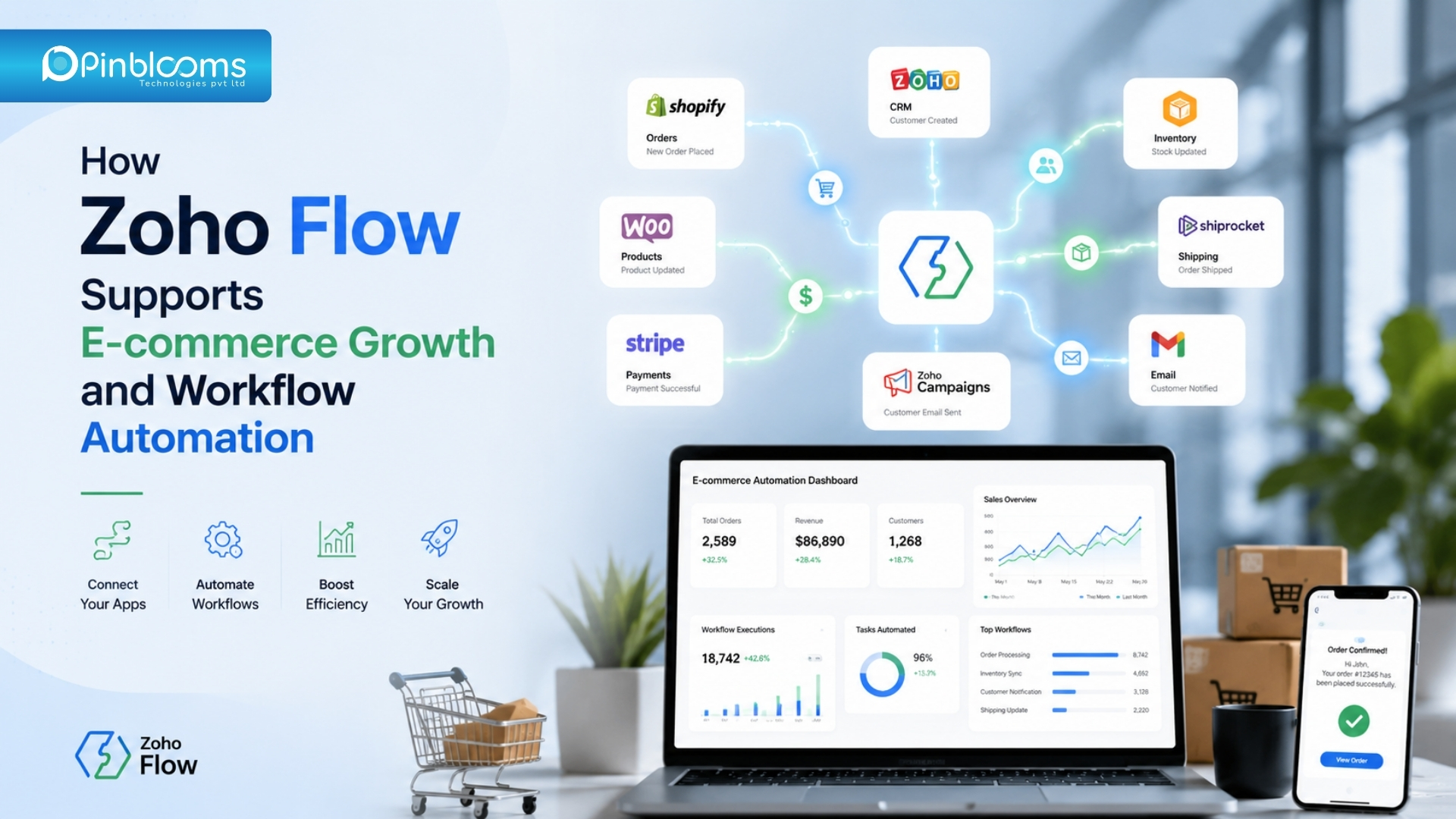
Zoho Flow helps automate order processing between e-commerce platforms and CRM systems.
Example Workflow:
When a customer places an order:
- Order details sync automatically
- CRM customer data updates
- Email confirmation is sent
- Inventory updates instantly
- Team receives notification
This improves workflow speed and reduces manual errors.
2. CRM & Customer Data Synchronization
Zoho Flow integrates with Zoho CRM to manage customer information automatically.
Benefits:
– Automatic lead creation
– Customer data synchronization
– Better customer tracking
– Faster communication
Businesses can improve customer relationship management and sales efficiency.
3. Inventory Automation
Inventory management is critical for online stores. Zoho Flow helps automate:
- Stock updates
- Low inventory alerts
- Warehouse notifications
- Product availability synchronization
This reduces inventory management issues and improves operational control.
4. E-commerce Marketing Automation
Zoho Flow supports automated marketing workflows by connecting:
- Email marketing tools
- CRM platforms
- Customer databases
- Social media integrations
Businesses can automate:
- Abandoned cart emails
- Promotional campaigns
- Customer follow-ups
- Product recommendation emails
This helps improve customer engagement and conversion rates.
Zoho Flow Integrations for E-commerce
Zoho Flow supports integrations with popular e-commerce and business platforms.
Popular Integrations:
- Shopify
- WooCommerce
- Magento
- Zoho CRM
- Razorpay
- Stripe
- Gmail
- Slack
- Mailchimp
These integrations help businesses manage operations from one centralized workflow system.
Benefits of Zoho Flow for E-commerce
Better Workflow Management
Automation helps businesses manage operations more efficiently.
Faster Communication
Applications communicate automatically without manual updates.
Reduced Manual Work
Zoho Flow automates repetitive tasks and improves productivity.
Improved Customer Experience
Businesses can provide faster order updates and personalized communication.
Scalable Automation
Zoho Flow supports growing businesses with flexible workflow solutions.
Why Businesses Use Zoho Flow for Workflow Automation
Zoho Flow is becoming increasingly popular because it offers:
– No-code automation
– Easy integrations
– Cloud-based workflow management
– User-friendly interface
– Scalable business automation
– Affordable pricing
It is one of the best workflow automation tools for modern e-commerce businesses.
How Zoho Flow Improves Business Automation
Zoho Flow improves business automation by:
- Connecting multiple applications
- Automating repetitive tasks
- Reducing operational delays
- Improving workflow efficiency
- Increasing team productivity
- Minimizing human errors
Businesses using Zoho Flow can focus more on growth while automation manages operational processes.
Conclusion
It is helping e-commerce businesses automate workflows, improve operational efficiency, and manage customer experiences more effectively. From order management and CRM synchronization to inventory updates and marketing automation, Zoho Flow provides smart workflow solutions designed for modern online businesses.
As e-commerce competition continues to grow in 2026, businesses using workflow automation solutions like Zoho Flow will gain a strong advantage in improving productivity, customer engagement, and long-term business growth. Businesses can integrate apps easily using Zoho Flow’s official automation platform.
FAQs
What Is Zoho Flow Used For in E-commerce?
It is used to automate workflows between e-commerce platforms, CRM systems, payment gateways, inventory management tools, and marketing applications.
Can Zoho Flow Integrate with Shopify?
Yes, Zoho Flow supports Shopify integration for automating orders, inventory updates, customer data synchronization, and CRM workflows.
Does Zoho Flow Require Coding?
No, Zoho Flow is a no-code automation platform that allows businesses to create workflows using a drag-and-drop interface.
How Does Zoho Flow Improve E-commerce Automation?
Zoho Flow automates repetitive business tasks such as order management, CRM synchronization, inventory updates, and customer notifications to improve operational efficiency.
Why Is Workflow Automation Important for E-commerce Businesses?
Workflow automation helps e-commerce businesses reduce manual work, improve productivity, manage customer communication, and streamline operations efficiently.